Oil prices are volatile on their first trading day of the week as investors keep their eyes on headlines amid reports of a ceasefire plan.
International benchmark Brent crude oil futures spiked 2.6% before reversing gains to trade 0.4% lower at $108.62 per barrel at 4:26 a.m. ET on Monday.
US West Texas Intermediate oil futures were 1.6% lower at $109.59 after climbing as much as 3.5% to $115.48 per barrel.
The price swings came amid a Sunday Axios report that the US, Iran, and a group of mediators were negotiating a 45-day ceasefire.
The diplomatic push unfolded alongside escalating rhetoric. On Sunday, Trump said on his Truth Social account that if Iran didn't open the Strait of Hormuz by Tuesday, the US would target its power plants and bridges.
After the US and Israel began bombing Iran in late February, Iran retaliated by essentially closing the Strait of Hormuz, through which a fifth of the world's oil and liquefied natural gas passes.
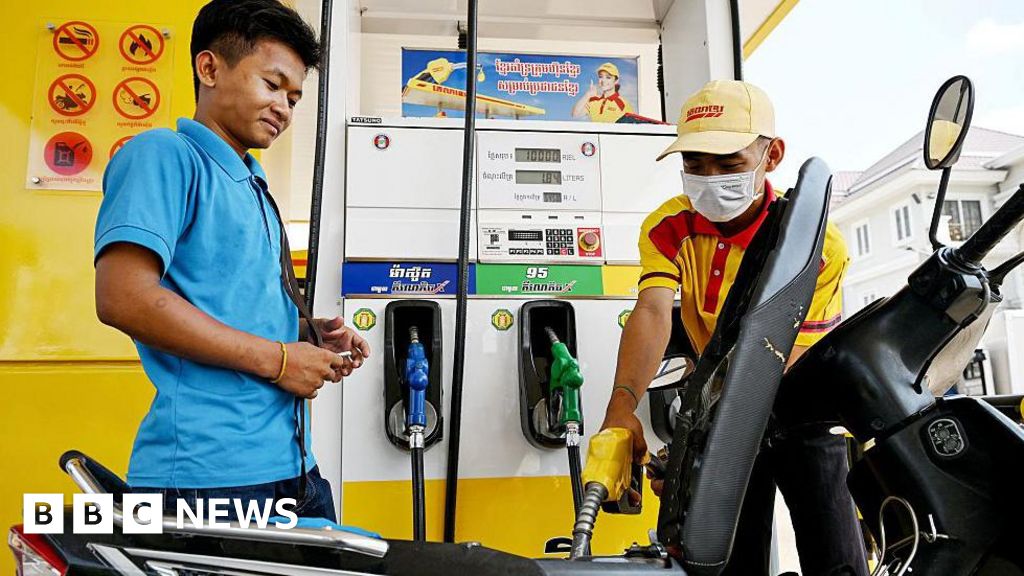
That closure and other war-related shocks have ripped through the global economy. The average price of gas in the US now exceeds $4 for the first time since 2022, when Russia invaded Ukraine. The cost of groceries in the US is also rising.
Jet fuel prices, too, are on the rise, reaching $195 at the end of March. Those rising costs, coupled with shortages, have pushed some airlines to pass on additional costs to travelers or cancel flights.
As markets await Trump's next move in the conflict, investors should look to the lessons of the COVID-19 pandemic and the war in Ukraine, wrote Marko Papic, the chief strategist at investment research company BCA Research, on Sunday.
In both instances, markets bottomed out before the actual crises were resolved.
"I do not think that oil prices will decline (and equities rally) when some clearly identifiable 'all clear' is sounded. The world may simply desensitize to the risks and 'move on,'" Papic wrote, pointing to early signs of some ship traffic returning to the Strait of Hormuz.
Papic suggested that the most likely outcome for the coming month is a transition to a "new kinetic equilibrium," in which geopolitical friction becomes a background constant rather than a primary market driver.
"I can imagine a scenario where Israel and Iran remain in open warfare for the next decade, but the global economy and markets simply… move on," he wrote.