Whatever emerges from the debris of the US-Israel-Iran war, Iran's nuclear programme will be at the heart of any agreement, and that deal will probably not look much different to the one that President Trump pulled out of in 2018, the awkwardly named Joint Comprehensive Plan of Action, or JCPOA.
That agreement, from 2015, is regarded as the signature foreign policy achievement of the second Obama administration, and was loathed by Donald Trump, the Republican Party and Israeli Prime Minister Benjamin Netanyahu.
Announcing the US withdrawal from the JCPOA, on 8 May 2018, President Trump called it a "horrible", one-sided deal which "didn’t bring calm, didn’t bring peace, and it never will".
The agreement was the culmination of decades of fraught, often dead-end diplomacy.
In its final stages, it had leveraged the five permanent members of the UN Security Council (US, China, Britain, France and Russia) as well as Germany and the European Union.
In simple terms, Iran agreed to set verifiable limits on its nuclear programme in return for the phased lifting of sanctions.
However, it was a highly technical and tortuously negotiated agreement, and those who instinctively wanted a more hardline approach to Iran could easily find weaknesses.
If the relationship between the US and Iran had been bedevilled by a lack of trust, going all the way back to the 1979 Islamic Revolution and the US hostage crisis, the nuclear issue crystalised that enmity.
For Iranians, the issue has historically been one of sovereignty and national pride.
Even before he was overthrown by the revolution, the Shah had explored nuclear energy on the basis that Iran’s vast oil and natural gas reserves had been exploited and controlled by Western countries.
Iran could not make the same mistake again (most Iranians agreed with him).
"With the fall of the Shah," writes Ali M Ansari in his short history of Iran, "the nuclear programme was shut down on the basis that it had been a colossal waste of money and an imperialist plot to recycle Iran’s money westwards. Scientists were imprisoned and the programme mothballed."
However, during the 1980-1988 Iran-Iraq War, when thousands of Iranian conscripts were slaughtered on the battlefield by Saddam Hussein’s chemical weapons, the new Islamist regime looked anew at the programme, as a potential deterrent, but also to show the world that a theocratic regime was comfortable with science.
Given the scale of Iran’s oil and gas reserves, which were then becoming apparent, the push for nuclear energy aroused suspicions in the West.
The US had applied sanctions following the 1979 hostage crisis and increased them after the bombing of a US barracks in Lebanon in 1984, in which 241 marines were killed, having concluded that Iran was involved.
The Clinton administration banned US investment in Iran’s oil fields. After 9/11, President George W Bush accused Iran of being part of an "axis of evil". Further sanctions punished foreign companies that traded with the country.
From Tehran’s perspective, Western antipathy to its nuclear programme was of a piece with the double standards going all the way back to the US and British-engineered coup of 1953, which overthrew the democratically-elected government of prime minister Mohammad Mossadegh and strengthened the rule of the Shah, Mohammad Reza Pahlavi (the coup was designed to protect British oil interests).
Iran was a member of the nuclear Non-proliferation Treaty (NPT), it argued, and like all members had the right to enrich uranium.
'We will extend a hand if you are willing to unclench your fist,' Barack Obama told Muslim leaders during his first inauguration address
In 2003, talks between the UN Security Council, the major EU powers and Iran on its nuclear programme got under way, but with the emergence in 2005 of hardline president Mahmoud Ahmadinejad, a strong advocate of Iran’s nuclear programme, they went nowhere.
Iran continued to assert its right to enrichment based on the NPT clause which ensures "the inalienable right of all the Parties … to develop research, production and use of nuclear energy for peaceful purposes without discrimination…"
The US and Security Council, however, were unmoved and further sanctions were imposed.
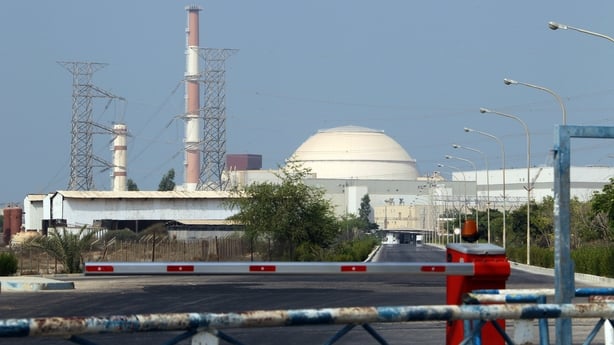
By 2006, Iran was known to have been operating a uranium enrichment programme with a cascade of 164 centrifuges at the Natanz facility.
Despite that, the five permanent Security Council members, plus Germany (the so-called P5+1 format), and the EU continued to offer Iran the prospect of sanctions relief if it abandoned its enrichment programme.
During his first inaugural address in 2009, Barack Obama famously told Muslim leaders that "we will extend a hand if you are willing to unclench your fist," but a rapprochement was not forthcoming.
Instead, after the regime crushed nationwide protests in Iran - known as the Green Movement - following complaints of vote rigging in the 2009 presidential election (which returned Mahmoud Ahmadinejad to power), relations deteriorated further.
Washington introduced fresh sanctions in 2010. The US and Israel allegedly infected Iran’s nuclear programme with the highly destructive Stuxnet computer worm.
President Obama also commissioned research into the bunker-buster bomb, of the kind used by President Trump last year, that could penetrate underground nuclear facilities.
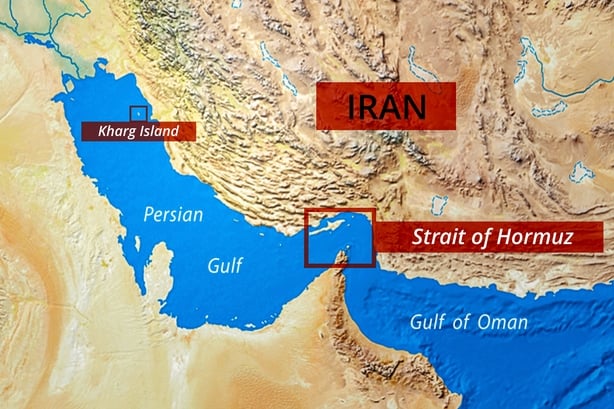
In 2011, Iran made the first threat to close the Strait of Hormuz over the presence of a US warship in the Gulf.
However, both the Obama administration and Iran’s Supreme Leader, Ayatollah Ali Khamenei, could see merit in a rapprochement, especially in light of the Arab Spring.
In 2013, Khamenei approved of the election as president of the more moderate Hassan Rouhani.
"For the regime," wrote Ali M Ansari, "Rouhani’s victory was a political masterpiece. Not only did it appear to close the door on the crisis of 2009, but it opened up the prospect of constructive negotiations on the nuclear programme."
Rouhani visited the UN General Assembly in New York; President Obama publicly acknowledged for the first time the US involvement in the 1953 coup.
In September of that year, the EU’s foreign policy chief Catherine Ashton hosted a meeting between Secretary of State John Kerry and Iran’s foreign minister Javad Sharif, the most high-level contact between the adversaries since 1979 (in fact, Kerry had held secret talks with Iranian officials in Oman 2012 thanks to an Omani back channel).
Yet, the nuclear issue was more complicated than ever.
"By the time multilateral talks were back in full swing, in 2013, harsh sanctions had been in place for years," wrote Wendy Sherman, Obama’s undersecretary of state for political affairs and a member of the US negotiating team, in Foreign Affairs in 2018.
"Yet Iran now had 19,000 operating centrifuges. Sanctions might have hurt Iran’s economy, but they hadn’t done much to thwart the country’s nuclear ambitions."
Iran was not going to give up what it believed was its sovereign right to enrich uranium.
The Obama administration dramatically changed tack: having for years demanded no enrichment, it would accept limited enrichment, provided it was closely monitored and verified.
The P5+1 and the EU would, in turn, reduce sanctions, restore access to $7 billion in frozen Iranian oil revenue funds, and drop bans on Iran’s auto industry and its trade in airplane parts. In other words, Iran would be gradually readmitted to the global economy.
"In practical terms, Obama wasn’t giving away much," wrote Sherman. "The Iranians had already mastered the science of uranium enrichment. They would continue to stockpile enriched uranium whether the United States accepted their right to do so or not.
"Insisting on a total prohibition of enrichment only frustrated the United States’ European partners and gave Iran the opportunity to cast Washington as the recalcitrant party."
Instead, the US could limit Iran’s enrichment while giving the regime cover to claim it had faced down the West to retain its civil nuclear programme and win relief from sanctions.
A framework agreement was reached in November 2013, and the intensely technical negotiations around uranium enrichment, gas centrifuges and sanctions relief got under way in Vienna over six rounds, with extended talks in Geneva and Lausanne, running until June 2015.
The early tension was around how many centrifuges Iran could keep and how much enriched uranium. The West wanted to restrict Iran’s enrichment capacity, while Tehran wanted to expand it. The more centrifuges Iran demanded, the lower the US insisted the stockpile of enriched uranium should be.
The negotiations were characterised by conflicting statements from both sides, with the US highlighting what Iran would have to relinquish, and Tehran highlighting what it could keep.
'Sanctions might have hurt Iran's economy, but they hadn’t done much to thwart the country’s nuclear ambitions' - Obama administration official
The US began by suggesting that Iran retain 6,000 to 7,000 gas centrifuges, required as part of the enrichment process.
It was understood that most of Iran’s low-enriched uranium would be sent abroad to be processed into fuel for the country’s Bushehr nuclear reactor, leaving only 300-500kg on Iranian soil at any one time.
This would have meant a so-called "breakout" period of one year - the length of time that Iran would need to produce enough enriched uranium to make a bomb (up to 27kg of 90% enriched uranium at its Natanz facility).
As the negotiations neared their climax, the US proposed that Iran be entitled to keep 6,104 centrifuges, of which 5,060 could continue to enrich uranium.
Iran’s stockpile of 10,000kg of low-enriched uranium should be reduced to 300kg of 3.67% enriched uranium for a period of 15 years.
Iran wanted to keep its existing stockpile of enriched uranium or, if not, sell it to the world market in exchange for fresh uranium.
By contrast, Washington wanted any surplus low-enriched uranium, beyond the permitted 300kg, to be down-blended - mixed with depleted uranium and returned to natural uranium.
A further constraint would be the time frame in which enrichment would be limited.
The US team demanded limits on enrichment to ensure a one-year breakout time that would be enforced for ten years.
These included caps on the number of operating gas centrifuges and the stockpile of low-enriched uranium, as well as a ban on new enrichment facilities.
After 15 years, these limits would be removed.
The Iranian fact sheet in the weeks before the deal simply mentioned that "the timeframe of the Comprehensive Plan of Action regarding Iran’s enrichment program will be 10 years".
There were further concerns about Iran’s heavy-water reactor at Arak which could provide a source of plutonium, a more desirable ingredient to make a nuclear bomb.
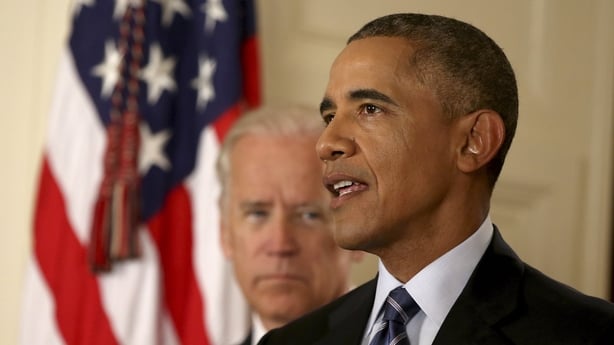
Yet, by July 2015, negotiators had got the deal over the line. It was signed in Vienna and took effect in January 2016.
The JCPOA dramatically cut Iran’s capacity to enrich uranium or plutonium to weapons grade, but critics on the Republican right and in Israel ridiculed its 15-year time frame.
Iran would reduce its stockpile of low-enriched uranium from 10,000kg to 300kg and limit enrichment to 3.67%, meaning it was appropriate for nuclear energy and research but not a weapon.
Uranium stocks in excess of 300kg enriched to 3.67% would be diluted or sold in return for uranium ore, while uranium enriched to between 5% and 20% would be converted into fuel plates for a research reactor (or sold abroad).
Iran would store two-thirds of its centrifuges, reducing active units to 6,104 centrifuges, with only 5,060 permitted to enrich uranium.
The agreement would "ensure the exclusively peaceful nature of Iran's nuclear programme" while "Iran reaffirms that under no circumstances will Iran ever seek, develop or acquire any nuclear weapons".
In order to verify compliance, the International Atomic Energy Agency (IAEA) would have a highly intrusive inspection regime during the 15-year period, including through the installation of cameras.
"Not only did they have those limitations and have an IAEA presence [at centrifuge facilities at Natanz and Fordow]," Obama’s deputy national security advisor Ben Rhodes recently told the Bulwark podcast, "[these included] cameras. It wasn't just people showing up every few weeks: it was constant monitoring.
"There was monitoring of uranium mines. Where do they mine the uranium? There was monitoring of uranium mills. How do they convert it into something that can be put in a centrifuge?
"Essentially, the entire supply chain of the Iranian nuclear programme, from when you take uranium out of the ground to when you ship that stockpile out of the country, was under monitoring and verification."
The deal also included a "snap back" provision, whereby sanctions could be reimposed by the UN if there was a serious breach of the agreement.
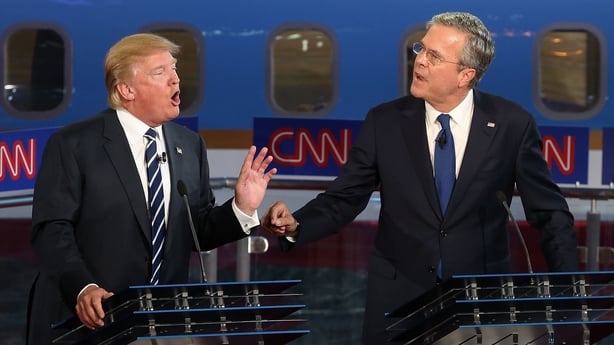
Reaction to the deal in the US predictably broke down along party lines.
Jeb Bush, then the leading Republican presidential candidate, described it as "dangerous, deeply flawed, and short-sighted." Senator Lindsey Graham called it "a death sentence for the State of Israel".
Supporters of the deal pointed to the highly intrusive nature of the monitoring element.
"It is correct to label these restrictions extraordinary," wrote Gary G Sick, a senior research scholar at Columbia University’s Middle East Institute.
"No other nation in the 47-year history of the Nuclear Non-Proliferation Treaty (NPT) has ever voluntarily agreed to such intrusions into its nuclear activities."
Yet, there were concerns about what would happen after the 10- and 15-year duration of elements of the agreement lapsed, and the fact that the so-called breakout time for Iran to develop a nuclear weapon would shorten as the deal tapered off.
Administration officials pointed out that nuclear arms reduction treaties tended to last a similar duration, and that 15 years hence, and with Iran progressively reintegrated into the world economy, the hardline revolutionary generation in Iran would have passed into history.
True to his word, Donald Trump pulled America out of the JCPOA one year into his first term.
Ironically, the IAEA insisted that during its short life, Iran had been complying assiduously with the agreement’s demands.
While the European Union and other signatories struggled to keep the deal intact, by the early 2020s, Iran declared it was no longer bound by the JCPOA’s constraints.
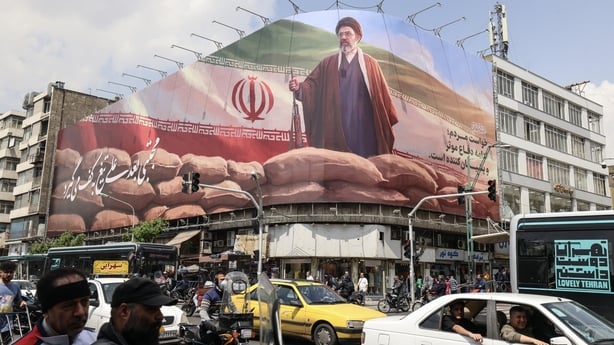
It progressively installed advanced centrifuges and increased its stockpile of enriched uranium way beyond the deal’s limits. IAEA inspection visits became more and more restricted.
By this year, it was thought that Iran had built up more than 9,000kg of enriched uranium, of which 440kg was enriched to 60% purity, with purity of 90% required to produce as many as 10 nuclear bombs (the JCPOA had committed Iran to enriching uranium only to 3.67% purity).
When President Trump returned to the White House, he said that he wanted a deal.
However, in June of last year, while tentative negotiations were under way, he launched the joint US-Israeli attack on the Natanz, Fodrow and Isfahan nuclear facilities using the GBU-57A/B MOP bunker-buster bombs which, he claimed, had obliterated Iran’s weapons capability.
However, the 440kg of highly enriched uranium could still be intact, giving Iran leverage that it did not have in 2015.
Proof that Trump’s war against Iran may have simply brought the world back to square one - the JCPOA by another name - can be found in the talks between US and Iranian officials that were taking place in Geneva before the 28 February attack.
Iran was then talking about reducing the highly enriched uranium back to 3.67% purity.
With the war on the brink of ending, the memorandum reported by Axios this week as the basis for a deal has the JCPOA written all over it.
There would be a moratorium on enrichment for around 15 years, with the US reportedly demanding that any Iranian violation trigger a prolongation of the ban, after which Tehran would be able to enrich to 3.67%.
As per the JCPOA’s preamble, Iran would commit to never seek a nuclear weapon or conduct weaponisation-related activities.
Iran would also commit to an enhanced inspections regime, including snap inspections by the UN, while the US would commit to a gradual lifting of sanctions and the gradual release of billions of dollars of frozen Iranian oil revenue.
Sound familiar?
The difference now is that Iran has even more leverage, beyond the 440kg of 60% purity level uranium: whereas closure of the Strait of Hormuz was a theoretical asset in 2015, today it has been proven to be extremely effective.