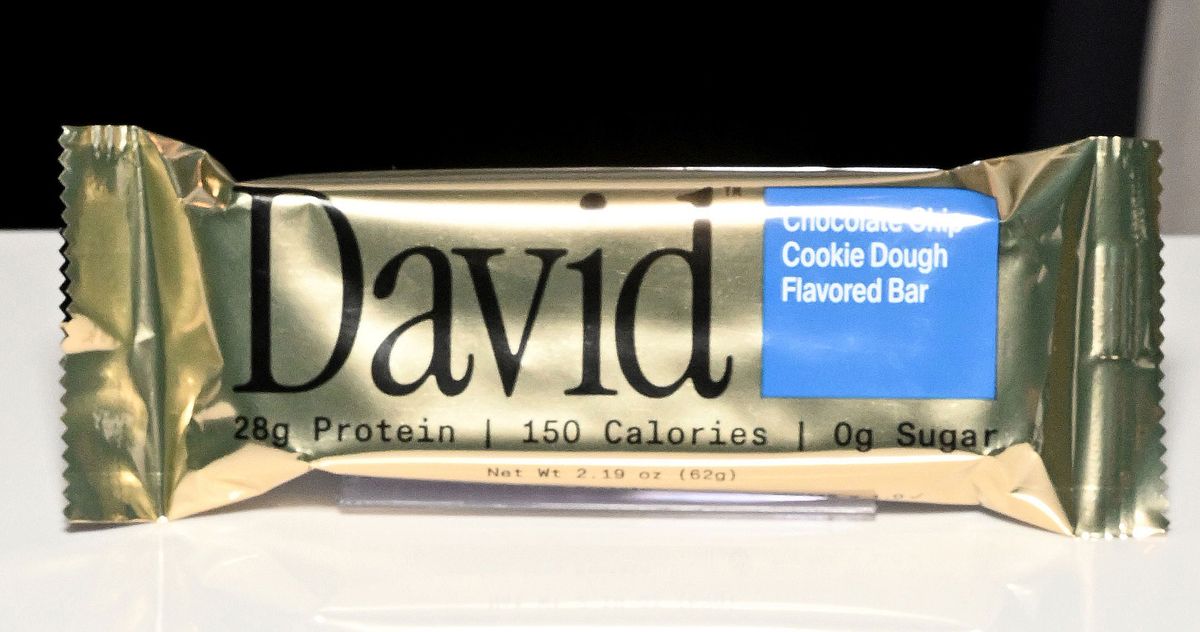

Photo: Slaven Vlasic/Getty Images for The Vitamin Shoppe
Since David bars first hit the market in 2024, they’ve become a cult favorite product for protein junkies and the macro-tracking set, largely because the bars’ nutrition facts claim they contain 150 calories and 28 grams of protein. But according to a class-action lawsuit filed earlier this year, those numbers might be too good to be true. According to the complaint, which was posted by a class-action news site this week and obtained by The Cut, testing on the bars revealed they allegedly contain about 83 percent more calories, and 400 percent more fat, than advertised.
The lawsuit accuses the company of misleading customers and violating FDA regulations. Per the complaint, an “accredited laboratory recognized by the FDA” tested a variety of the brand’s flavors and found each bar contained between 263 and 275 calories — not, as the label says, 150 calories. The suit also claimed that the bars contain far more fat than the label indicates, coming in somewhere between 11.76 and 13.52 grams — more than four times the listed fat content of two to 2.5 grams.
In January, shortly after the suit was first filed, the brand’s co-founder Peter Rahal defended the company’s nutrition labeling in an interview with Vanity Fair. “We stand behind the accuracy of our product labeling, which complies with FDA requirements for measuring and reporting nutritional content,” Rahal said. He argued that the lawsuit “fails to understand how the FDA measures the calories for EPG, one of our key ingredients.” EPG, which stands for esterified propoxylated glycerol, is a fat substitute manufactured by Epogee, a company that was acquired by David last year.
In a letter that was sent to customers and shared with The Cut on Thursday, Rahal reiterated that the claims in the lawsuit are “simply wrong.” “It rests on a flawed and misleading interpretation of how calories are determined for certain ingredients under U.S. food labeling regulations,” Rahal wrote. According to the letter, the testing mentioned in the lawsuit was done using bomb calorimetry, which measures “total heat released when food is completely burned” but which Rahal claims is “not the right testing method” for measuring EPG, which falls under an umbrella of ingredients that are “not fully bioavailable and therefore do not yield their full caloric content when ingested.”
This is not the first time David’s use of EPG has gotten the brand in legal trouble — in May, three former Epogee clients accused Rahal of antitrust violations for David’s exclusive access to EPG. In court documents, David reportedly fired back that the former clients “only have themselves to blame” for not securing their own long-term Epogee contracts. None of this seems to have slowed down the growth of everyone’s favorite design-y protein bars — Rahal recently told The New Consumer that he plans to launch more products this year. Something tells me those will be shockingly low in calories and fat, too?
This post has been updated.